Before all of this, I did triathlons — including completing a full Ironman. Swimming, cycling, running — I was someone who moved, someone who pushed himself hard physically, someone who found a lot of satisfaction in that. I was always a morning person too — up at six, out exercising, back for the school run. That was just who I was. And then surgery and treatment took a big chunk of that away from me, and I had to figure out what movement looked like in this new version of my life.
I'm still figuring it out, if I'm honest. But I'm moving again, and that matters.
Why the mountain bike, not the road bike
The back pain changes everything when it comes to cycling. A road bike is fast and efficient, but the vibration that comes through a narrow tyre on tarmac goes straight into my spine. Even being in a car for more than three hours leaves me suffering for it — so a road bike was never going to work.
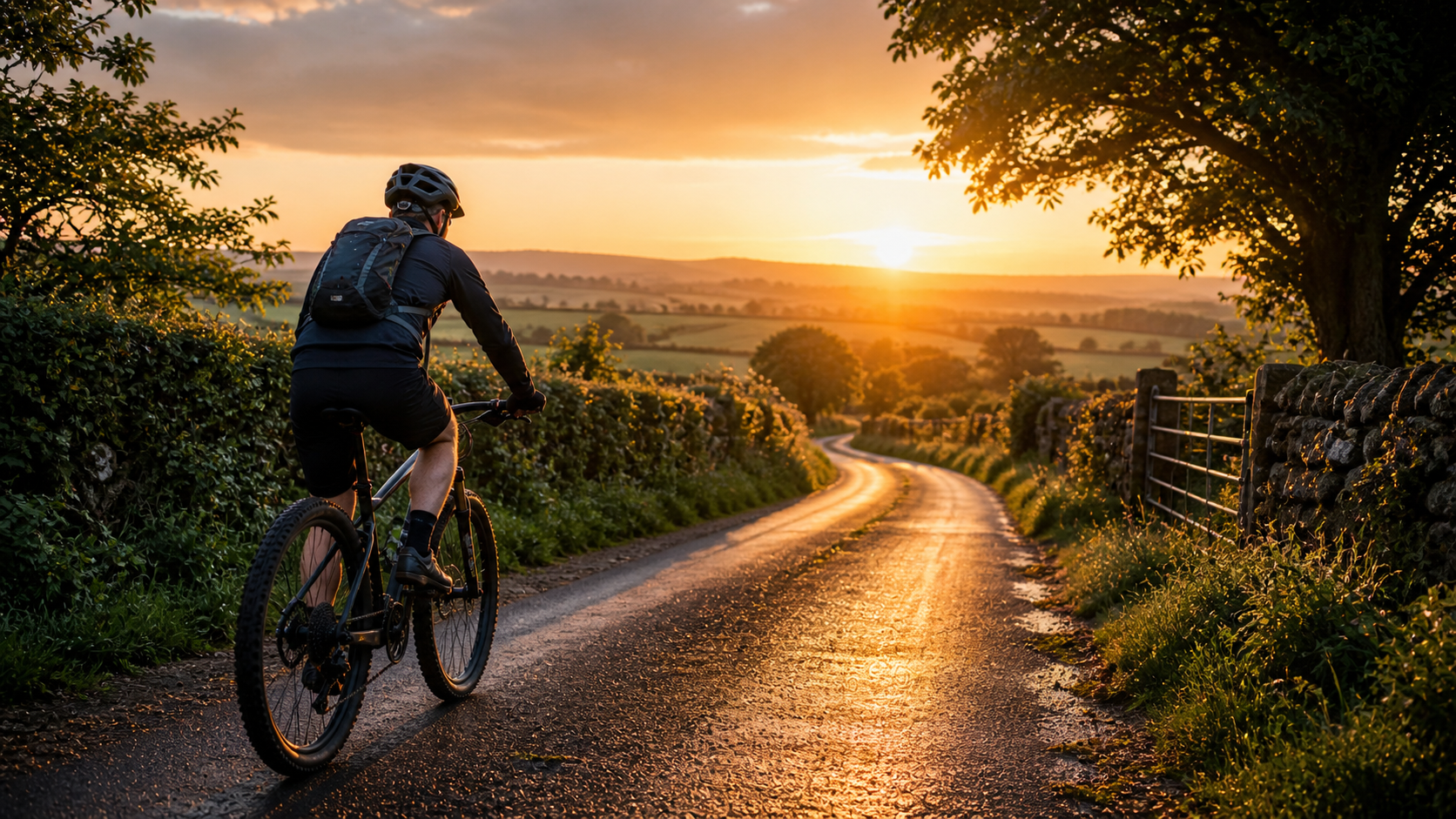
The mountain bike was the answer. The fat tyres absorb the road surface in a way that a road bike simply can't. It's slower, it's heavier, it looks less serious — and I genuinely don't care about any of that. It gets me out, it keeps me moving, and my back can handle it. That's the only criteria that matters now.
I used to care about speed and distance and personal bests. Now I care about getting out the door. And honestly — that feels like a healthier relationship with exercise than the one I had before.
The mornings
I was always a morning person — up at six every day without fail, out exercising, back in time for the school run. That routine was just part of who I was. I don't manage that anywhere near as often now, and I've had to make my peace with that. But when I do get out early, the sunrise still hits the same way it always did. The quiet, the light, that feeling of the world starting up again.
On those mornings, getting out on the bike feels like a small but meaningful connection to the person I was before all of this.
Learning to listen — the hard way
I'll be honest about the mistakes I made early on, because I think they're worth sharing. There were times when I overdid it — tried to push too hard, tried to do too much, tried to be the person I was before rather than the person I am now. I even tried running again at one point, because running was part of who I was and I wanted it back.
My back and my feet made their feelings very clear on that one.
The cruel thing about overdoing it is that it doesn't hit you straight away. You feel fine on the day. It's the morning after that you pay for it — sometimes spending a few days in bed wondering why you didn't just listen.
I've learned. Slowly, and not without some painful lessons, but I've learned. Running is off the table now and I've made my peace with that. The bike is my foundation, and I'm adding to it as I go.
When the upper body started suffering
After a while of just cycling I started to notice that my upper body felt weak. The weight loss from the first year of treatment had taken muscle as well as fat, and cycling alone wasn't addressing that. So I've recently added two things to try to rebuild it — functional exercises focused on flexibility and upper body strength, and swimming.
The swimming is new. A couple of sessions a week, about twenty minutes each, nothing intense. Swimming is probably the most forgiving exercise there is for a body that's been through what mine has — no impact, no vibration, just movement in water. It's early days but it's already feeling like the right thing to add.
I'll write a separate post sharing what a typical week of exercise looks like for me right now — the cycling, the swimming, the functional work — so anyone in a similar situation can see how I'm trying to balance it all.
Still figuring it out
There was no big moment where it all clicked. No ride where everything suddenly felt different. I'm still working out what exercise looks like in this body, with this energy level, with these limitations. Some days are better than others. Some days I don't get out at all.
But on the days I do — out on the mountain bike, watching the sun come up, feeling the cold air — that's not nothing. For where I've been, that's everything.
As always — this is my personal experience only. Everyone's body is different, and anyone going through cancer treatment should speak to their medical team before starting or changing an exercise routine. What works for me may not be right for you.
— Nick