I wrote the scanxiety post the night before my last scan. If you haven't read it, go back and read it — because this post is the follow up. And it's a good one.
I got the results three days before the fun day. Which meant I walked into that event carrying news I hadn't fully processed yet. But I'm getting ahead of myself.
Dr Bianchini
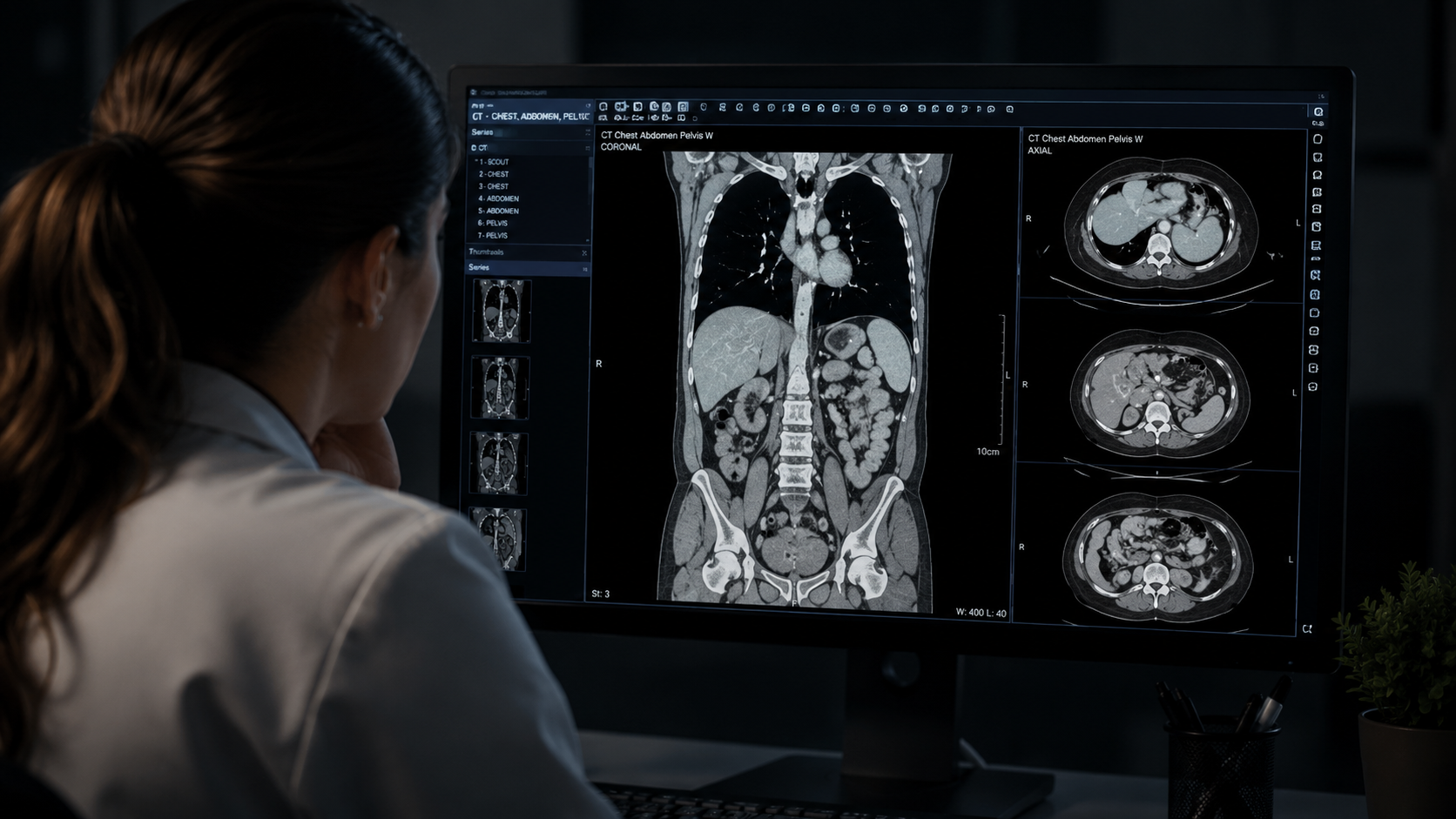
This appointment was slightly different from the usual. We got to see the head oncologist — Dr Bianchini — who I hadn't really seen since the early scans, well over a year ago. I always appreciate seeing her. She's thorough in a way that goes beyond the standard appointment. She looks at the images properly, shares them with you, explains what she's seeing, goes back to earlier scans for comparison if you ask. She's genuinely interested — not just in the data but in the whole picture.
The initial assessment was that the tumours are still classed as stable. Which in itself is good news — stable means not growing. But then she looked more closely at the images.
The numbers
The tumours had shrunk again. Another 1.5cm on the longest measurement. But it was when she pulled up one of my earliest scans for comparison that the room changed.
Looking at where the tumours were at the beginning versus where they are now — you could almost fit both current tumours into the space that one original tumour used to occupy. The difference was astounding.
There are two main tumours. One attached to my psoas muscle — dense and fibrous, which we think is what causes the back pain when I overdo things. The other sits next to it in the renal bed, described as more cystic and fluid-like. They've been there side by side since the beginning. But the difference between how they looked over a year ago and how they look now was something else entirely.
Why this is unusual
This is the part that made the appointment different. Dr Bianchini explained that on my drug combination — Nivolumab and Cabozantinib — the typical pattern is a positive response in the first six months or so, followed by a stable period for however long it lasts. That's what most people experience.
My pattern has been different. I had an initial positive response — good, but perhaps not quite as dramatic as sometimes seen — before going into a stable phase. Normal so far. But then, after at least six months of stability, my tumours started shrinking again. And they're continuing to respond.
She said it was unusual. I heard "I'm special" — though not everyone in my life would necessarily agree with that assessment.
She was very pleased. More than pleased — genuinely interested in why this might be happening.
What I told her
I asked her why she thought it might have happened. She offered a few thoughts but admitted she didn't have a definitive answer. So I told her mine.
The extra shrinkage has happened since I started meditating daily. Three months of it every morning, focused directly on the tumours. I've written about this in detail elsewhere on the site — but the short version is that I started after my three month scan in January, did it every single day, and this is the scan that followed.
I expected her to be politely sceptical. She wasn't.
She said it may help lower cortisol levels — and lower cortisol allows the body to fight the tumours more effectively. She told me whatever I'm doing to keep doing it. And then she said something I'll remember for a long time: it's what I'm doing, not necessarily what they're doing, that is fighting this disease.
An oncologist. Saying that to me. About meditation.
I'm not saying meditation cured anything. I'm not saying it's the reason the tumours are shrinking. I genuinely don't know and neither does she. But she didn't dismiss it. She engaged with it seriously and offered a credible biological mechanism for why it might be helping. That matters.
Three days later
I got these results three days before the fun day. So I stood up in front of everyone we love and gave my little speech carrying this news — news that I was still processing, still sitting with, still trying to make sense of.
The tumours are shrinking. The response is unusual. The oncologist is pleased. And somewhere in all of that — in the diet, the exercise, the meditation, the mindset, the decision to live rather than wait — something is working.
I don't know exactly what. I'm not sure it matters. Keep doing what you're doing, Nick.
So I will. 🩷
— Nick