In the last post I talked about Dr William Li and the research that convinced me to completely rethink the way I eat. But theory is one thing — what does it actually look like in practice? What do I eat on a normal day?
The honest answer is that it's simpler than you might think. And a lot more enjoyable than I expected it to be.
Starting the day — or not
I skip breakfast. I won't go into the science behind that here — that's a whole separate post about intermittent fasting — but the short version is that I try to push my first meal as close to midday as I can manage. Not rigidly. Not if my body is telling me it needs something. I listen to my body now in a way I never really did before, and if I'm genuinely hungry before noon then I eat. But most days I'm fine waiting.
I've stopped eating by the clock and started eating by how I actually feel. It took a bit of getting used to but now it feels completely natural.
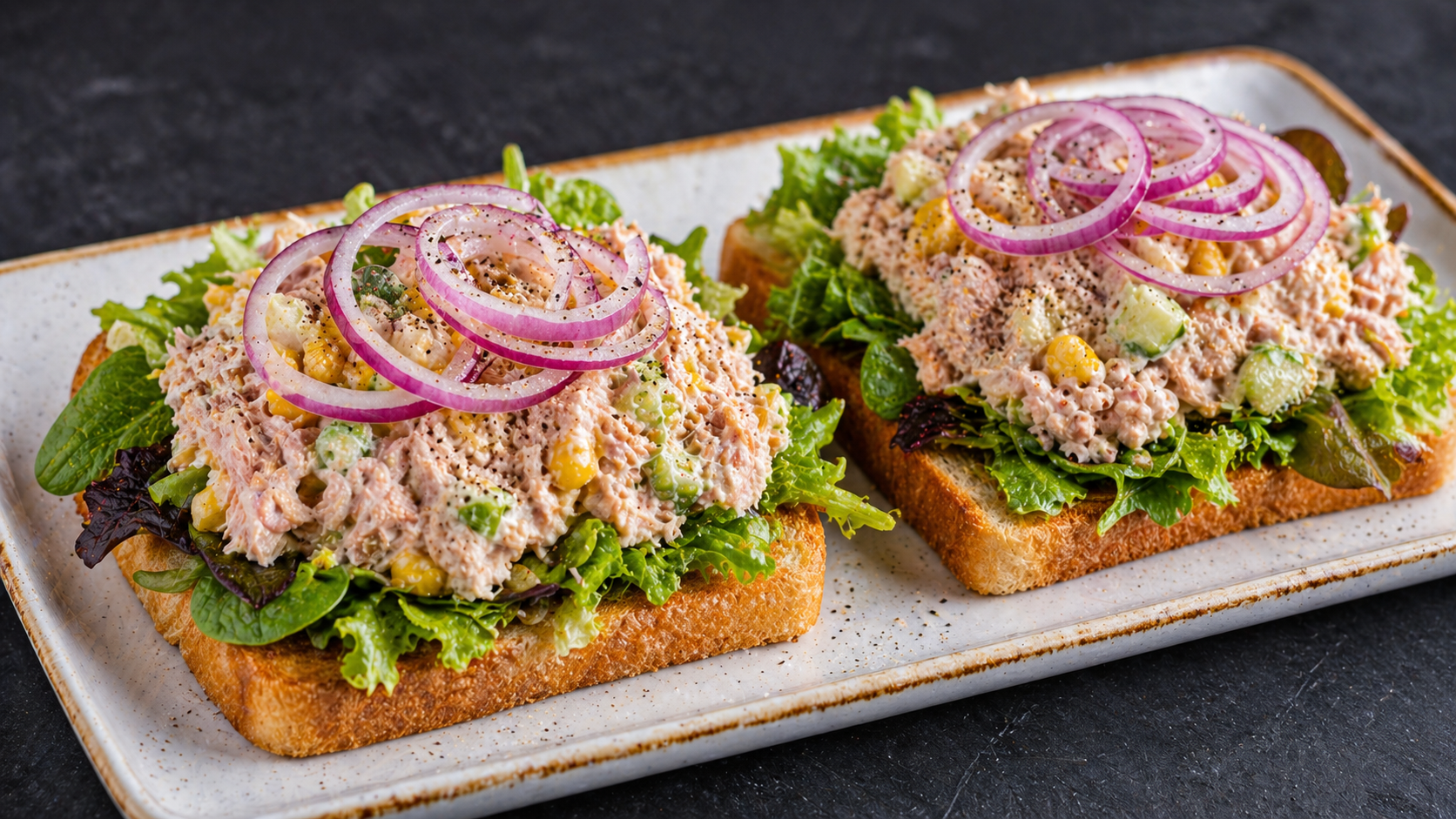
Lunch — the tuna crunch
This has become my signature lunch and I genuinely look forward to it every single day. It sounds simple because it is, but don't let that put you off — it looks incredible on the plate and tastes even better.
The Tuna Crunch
Base: Wholemeal or sourdough toast
Topped with: Iceberg lettuce, sweetcorn, red onion, cucumber, red cabbage, grated carrot, tuna mayo
The colours alone make it worth eating. Every ingredient is doing something useful — the cabbage and carrot for polyphenols, the red onion for flavour and antioxidants, the tuna for protein. And it fills me up properly without leaving me feeling sluggish.
On days when I want something a bit different — or if I'm feeling what I can only describe as a simpler kind of hungry — I'll make eggy bread instead. Good eggs for protein, sourdough or wholemeal bread to avoid sugar spikes. It's comfort food that also happens to be genuinely good for you, and sometimes that's exactly what you need.
Snacks — fruit, and plenty of it
Throughout my eating window I'll snack on fruit. And I don't go short. Red grapes, apples, oranges, kiwi, melon, watermelon — whatever's in the house. I eat fruit the way I used to eat biscuits, which tells you something about how much my relationship with food has changed.
Red grapes in particular have become a staple. They're high in resveratrol, one of the most researched polyphenols when it comes to cancer. And they taste great, which helps.
I genuinely don't feel like I'm missing out. If anything I feel like I was missing out before — on how good real food actually tastes when it's not competing with artificial flavours.
Dinner — real food, proper flavour
Dinner rotates between a couple of things I really enjoy. A curry is a regular — red onion, mushrooms, chicken, maybe a side of broccoli or peas. Curry spices like turmeric and cumin are packed with anti-inflammatory compounds, so it's one of those meals that's actively doing you good while also being genuinely satisfying.
Or a more traditional plate — meat and vegetables. Broccoli, carrots, potatoes, sweet potatoes, cauliflower. The kind of dinner that used to feel like the boring option but now feels like exactly what my body wants. I'll have chicken or turkey most of the time. I still eat the occasional steak — I'm not going to pretend otherwise — but it's occasional rather than regular, and I enjoy it more for it.
A typical dinner
Option 1: Chicken curry with red onion, mushrooms, and a side of broccoli or peas
Option 2: Roasted chicken or turkey with broccoli, carrots, sweet potato, cauliflower
Both are straightforward to make, both are full of colour, and both leave me feeling properly full without the heaviness that used to follow a bigger, fattier meal.
What's changed — and what it's meant
The thing that surprised me most about changing my diet is how quickly I stopped missing the old way of eating. I don't crave ultra processed food. I don't feel deprived. If anything I feel fuller on less food than I used to eat, which I wasn't expecting at all.
The numbers back that up. I was over 105kg when I was diagnosed. I'm now around 90kg. That's not from starving myself — it's from cutting out the stuff that was adding weight without adding anything useful, and replacing it with food that actually satisfies.
Fifteen kilograms gone, and I genuinely didn't feel like I was dieting. That tells you something about how much the old way of eating wasn't serving me.
I'm not saying this is the only way to eat. I'm not saying it will work the same way for everyone. But it's working for me, and it feels sustainable in a way that diets never did before — because it's not a diet. It's just food. Real food.
As always — this is my personal experience only and is not medical or dietary advice. Please speak to your own medical team or a registered dietitian before making significant changes to how you eat, especially if you are undergoing cancer treatment.
— Nick